Khushi was running a school cross-country race when everything suddenly changed.
11-year-old Khushi Shah collapsed into cardiac arrest at Jordan Springs Public School in western Sydney. Her teachers immediately started CPR and called Triple Zero. What happened next shows how technology can make an emergency response network much bigger than the organisation itself.
Among those alerted through GoodSAM was Josh Gow, an NSW Rural Fire Service volunteer who happened to be at the school. Another nearby responder, Surf Life Saving volunteer Thomas Walker, also responded. They helped support the immediate response until paramedics arrived.
Khushi survived.
So, what is GoodSAM?
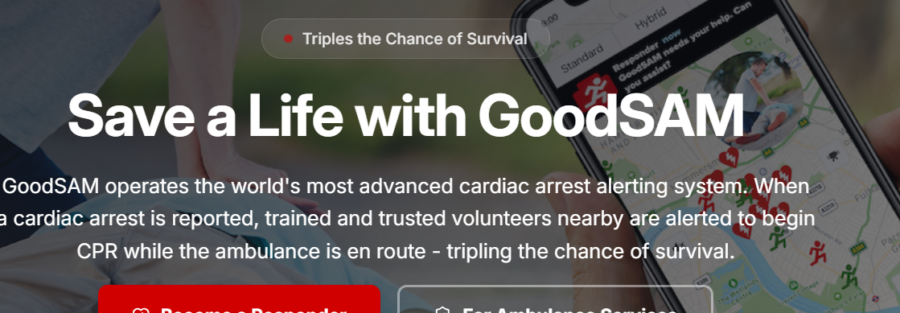
GoodSAM is a digital platform that connects emergency services with trained people who are already nearby and able to help in an emergency.
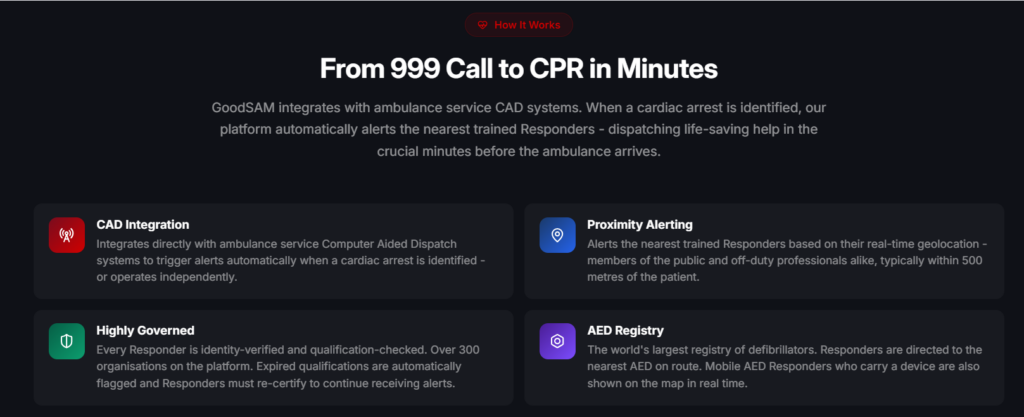
Locate & Alert — when a suspected cardiac arrest is identified, GoodSAM can alert nearby registered responders based on their location.
Find the Equipment — the platform can also identify registered AEDs nearby, helping responders access potentially critical equipment before an ambulance arrives.
Connect the Response — responders can provide CPR and other assistance while communicating with emergency services, creating a bridge between the incident and professional medical help.
AI-Powered Assistance — GoodSAM is also bringing AI into emergency response, with capabilities designed to support emergency communications, documentation and the flow of information between people and services. The direction is significant: using AI not simply to automate administration, but to help people make sense of information and coordinate action when time matters.
The innovation is bigger than the app.
GoodSAM is effectively turning distributed community capability into part of the emergency-response network. It doesn’t need to create another ambulance fleet or employ another army of responders. Instead, it connects firefighters, lifesavers, healthcare professionals, trained volunteers and emergency equipment that already exist within the community.
The model is interesting because the value comes from the connection, not necessarily from owning the assets.
Boundaryless Thinking triggers
GoodSAM turns nearby community capability into an emergency-response network
I would like to apply boundaryless thinking
with ideas on: product design, smart operations, decisions with data
which can be applied in: service operations, workforce models, smart routing, AI-assisted decisio
in areas like: IT, Telco, Government Services, Financial Services
References
https://www.goodsamapp.org/cardiacs/