
Kenji needs a colleague’s help.
In many organisations, that would mean asking his manager to negotiate with another manager, explaining the priority and waiting for someone to become available. The work might take an afternoon; securing the person could take considerably longer.
At Japan’s DISCO Corporation, Kenji could approach the situation differently: describe the work, agree the conditions and offer an internal currency called Will.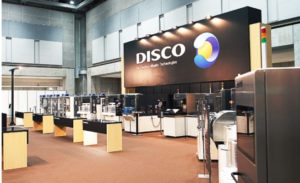
What if access to someone’s capability depended on an agreed exchange, rather than authority over their position?
Meet Will Accounting
DISCO makes precision cutting, grinding and polishing equipment and tools used in semiconductor production. Inside this engineering business, it has also developed an unusual mechanism for coordinating people and work.
Its Will Accounting system assigns internal values to work and resources, recording income and expenditure. Introduced at department level in 2003 and extended to individuals in 2011, it allows employees to choose work offered by supervisors, colleagues and other departments with a designated Will price.
1. Let people agree the work they take on
DISCO’s internal auctions make work available to employees who propose the Will amount for which they would undertake it. The requester and prospective contributor agree the terms before work begins.
According to DISCO, popular work can attract people willing to accept less Will, while less attractive work may require a higher offer. Employees can also make different choices: some pursue demanding projects with higher returns; others prioritise work compatible with their personal circumstances.
For Kenji, this changes the conversation. He needs to make the request understandable and worthwhile to the person receiving it. The colleague’s willingness becomes part of how work is organised.
2. Make the cost of asking visible
In conventional organisations, internal requests can feel free to the requester even when they consume considerable time elsewhere.
Will Accounting makes those exchanges visible. DISCO records work-related income alongside expenditure, including labour and equipment costs, giving departments and individuals a view of the resources their activities consume.
The system also connects contribution with tangible consequences. A portion of bonuses depends on departmental and individual Will balances. A related mechanism, DISCA, allocates spending authority that can be used for eligible expenses without obtaining a supervisor’s approval.
The operating-model implication is significant: requesting work, contributing capability and using resources become connected decisions.
3. Give the internal market rules and stewardship
An internal market still needs someone to protect work whose value may emerge slowly.
DISCO’s published design provides company-level funding for activities such as education, infrastructure and improvement. Its Investment Box mechanism also allows employees to seek internal backing for projects; initiatives meeting the rules and funding threshold can generally proceed without waiting for management approval.
Managers retain responsibilities for clarifying purpose, priorities and completion conditions, exercising judgement and supporting agreement. Will does not directly determine base salary and cannot be exchanged for cash outside the company.
Autonomy therefore depends on deliberate governance: who funds essential work, how requests are defined and what happens when nobody accepts them.
An operating model beyond the organisation chart
DISCO offers an unusual Boundaryless Thinking® lesson: mechanisms familiar from markets—prices, negotiation, voluntary exchange and investment—can help coordinate work inside an enterprise.
For leaders considering a different operating model, the useful question is where such mechanisms could improve access to expertise, expose hidden demand or give people greater agency. Their effectiveness would depend on the organisation’s work, relationships and safeguards; the mechanism alone does not establish better outcomes.
The deeper design question concerns how work moves between people, alongside where those people sit.
For Kenji, the next step is to make a clear offer—and find a colleague willing to agree.
Boundaryless Thinking triggers
Intelligent process and advanced technologies revolutionises the mass manufacturing
I would like to apply boundaryless thinking
with ideas on: internal markets, negotiated work allocation, visible resource costs
which can be applied in:operating-model design, specialist resource allocation, decision rights and rewards
in areas like: Financial Services, IT Services, Engineering, Professional Services
Reference
DISCO — Individual Managerial Accounting System: Will Accounting
DISCO — Will Accounting: detailed design and governance, Japanese
DISCO — Internal systems: auctions, DISCA and Investment Box, Japanese
DISCO — Corporate website and product information